
Coming September 17, 2026*
A Climate of Polarization:
Holding unto Our Humanity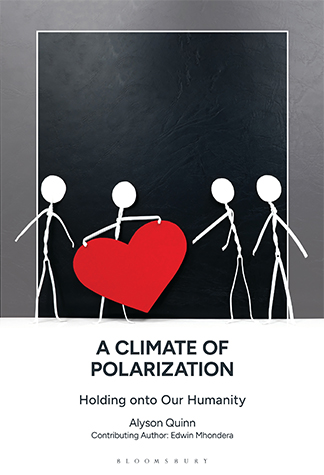
By Alyson Quinn
Bloomsbury
The book takes a unique angle by integrating an extensive history of polarization, history of trauma and neuroscience into the text. The text aims to deepen the readers understanding of the neurobiological implications of divisive thinking and the impact on those that experience aspects of it.
Polarization has been a persistent theme throughout human history. A Climate of Polarization: Holding onto Our Humanity offers a powerful interdisciplinary exploration of how polarization has shaped societies across history and its impact on collective empathy and a shared humanity.
Tracing polarization from its early roots Alyson Quinn, with contributing author Edwin Mhondera, reveal how rigid positionality around class, race, gender, culture, and ideology has become both historically entrenched and neurologically reinforced. The book takes a unique angle by integrating a brief history of polarization, history of trauma and contemporary neuroscience into one text, tracing fault lines through colonialism, capitalism, war, ideology, religion, and modern media. Drawing on the latest research in neuroscience, Quinn deepens our understanding of how trauma and divisive ideologies affect the brain and nervous system - and how these impact and perpetuate cycles of conflict and dehumanization.
With intellectual rigor and moral urgency, A Climate of Polarization: Holding onto Our Humanity invites readers to reclaim something essential: our capacity to feel deeply, to listen openly, and to respond humanely - even across profound differences. By integrating historical insight with trauma-informed understanding, this text offers a vital framework for healing, connection, and collective resilience in a time of overlapping crises.
A Climate of Polarization makes a significant contribution to the social sciences, psychology, trauma studies, and conflict resolution. It is an essential resource for thought leaders, scholars, community leaders, and mental health professionals seeking to understand - and interrupt - the dynamics of division that exist today.
Use Code GLR AT8